Difference Between Keychron K8 Max and Samsung Galaxy Tab S11 Ultra Explained
Introduction
At first glance, comparing the Keychron K8 Max and the Samsung Galaxy Tab S11 Ultra seems unusual: one is a mechanical keyboard and the other is a flagship tablet. Yet buyers often decide between peripherals and computing platforms when assembling a workflow, and understanding how these two very different pieces of hardware fit into real-world setups helps clarify priorities. This article explains the core differences in purpose, design, features, and user experience between the Keychron K8 Max and the Samsung Galaxy Tab S11 Ultra, and offers guidance for buyers who are deciding which investment makes the most sense for their needs.
Why compare a mechanical keyboard and a tablet?
Buyers rarely choose one over the other directly, but the decision to invest in a premium keyboard or a high-end tablet often depends on how they work. For example, someone setting up a portable productivity rig might consider whether to prioritize a compact, tactile typing surface or a powerful touchscreen device that can also act as a display, sketch pad, and lightweight laptop replacement. Comparing these products side-by-side by use case, portability, interoperability, and value helps readers match technology to tasks such as writing, coding, creative work, and travel.
Product overviews
Keychron K8 Max — a mechanical keyboard focused on typing and customization
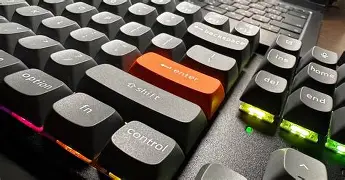
The Keychron K8 Max positions itself as a premium mechanical keyboard for people who spend significant time typing. It builds on the K8 lineage with a strong emphasis on key feel, long battery life for wireless use, and broad compatibility with both macOS and Windows. Typical features include hot-swappable switch sockets for easy customization, multi-device Bluetooth pairing, and a compact tenkeyless layout that balances desk space with full typing utility. The K8 Max targets writers, developers, and enthusiasts who value tactile feedback, durability, and a long-term customizable input device that improves comfort and speed.
Samsung Galaxy Tab S11 Ultra — a flagship tablet for productivity and media
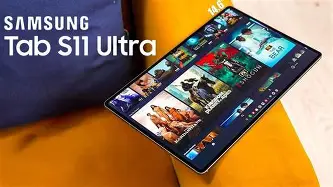
The Samsung Galaxy Tab S11 Ultra is designed as a premium tablet aimed at users who want a combination of a large, high-quality display, pen input, and a full-featured mobile operating system with desktop-like productivity modes. It typically includes advanced display technology, strong processing power for multitasking and content creation, and deep integration with accessories such as keyboard covers and an active stylus. Its audience ranges from creative professionals sketching and editing, to students and business users requiring portable productivity with excellent media playback.
Detailed product analysis
Design and build
Keychron emphasizes sturdy mechanical construction and a compact footprint. The K8 Max usually offers an aluminum or reinforced plastic frame, optimized key spacing, and sometimes a low-profile option. The design favors stability on the desk and durable switches and stabilizers to minimize wobble and noise. The keyboard’s weight and rubber feet are tuned so that it stays put during fast typing sessions.
The Galaxy Tab S11 Ultra is a display-first device. Samsung’s design language tends toward thin bezels, premium metal and glass materials, and slim profiles suitable for carrying in a bag. Durability and finish quality matter for a device that will be handled and transported frequently, and Samsung traditionally balances lightness with solid build quality to appeal to professionals.
Input and interaction
The Keychron K8 Max is purely an input device: its strengths are mechanical switches, keycap profiles, and layout ergonomics. Hot-swap functionality allows users to change switch types (linear, tactile, or clicky) without soldering, tailoring force and sound to preference. Multi-device pairing and wired USB-C connectivity make it a flexible hub across machines. The keyboard’s real value lies in the typing experience: more tactile and consistent feedback often improves accuracy and reduces fatigue over long sessions.
The Galaxy Tab S11 Ultra is centered on direct touch and pen input. The active stylus is aimed at note-taking, sketching, and precise selections; palm rejection and pressure sensitivity are essential attributes for creative workflows. When combined with a folio keyboard accessory or Samsung’s productivity mode, the tablet can mimic a laptop, though typing ergonomics and shortcut availability differ from a dedicated mechanical keyboard.
Performance and software
The Keychron K8 Max has no processing performance to benchmark in the same way as a tablet; its "performance" is measured in latency, connectivity stability, battery life, and firmware features like key remapping and macros. Enthusiast keyboards may offer programmability via companion software or QMK/VIA compatibility, which matters to power users who rely on custom layers and shortcuts.
The Galaxy Tab S11 Ultra runs an Android-based OS with Samsung’s One UI enhancements and productivity features such as multi-window, Dex-like desktop mode, and advanced stylus support. Its processor determines how smoothly apps multitask and render complex content, and the device’s RAM and storage affect how many large apps and files can be handled concurrently. Software ecosystem and app quality—particularly for creative apps and productivity suites—are decisive when evaluating tablet performance in real-world scenarios.
Find top-rated Laptops & Computers products at great prices.
Shop Amazon →Battery life and portability
The Keychron K8 Max prioritizes long battery life while offering wireless convenience; it can last many days or weeks on a single charge depending on backlight settings and daily use. Portability is about carrying a compact, durable peripheral in a bag or backpack; the K8 Max’s tenkeyless form factor reduces space requirements compared with full-size keyboards.
The Galaxy Tab S11 Ultra aims to strike a balance between a large display and all-day battery life. For heavy tasks like video editing or prolonged high-brightness media playback, stamina falls faster, so users must consider typical usage patterns. Portability is nuanced: the tablet is thin and light relative to laptops but still larger than typical e-readers or small tablets; combined with a keyboard case and stylus, it becomes a mobile workstation for on-the-go work.
Real-world use cases
- Writers and editors: A mechanical keyboard like the Keychron K8 Max excels with long-form typing, offering better key feel and customization that can reduce strain and improve speed. It pairs well with a laptop or desktop setup.
- Developers: Programmers who need tactile feedback, dedicated shortcuts, and ergonomic layouts will appreciate the keyboard’s responsiveness and customizable layers.
- Content creators and illustrators: The Galaxy Tab S11 Ultra is oriented toward drawing, photo editing, and storyboard work—especially when paired with an active stylus and appropriate software.
- Students and note-takers: The tablet provides an all-in-one device for handwritten notes, reading PDFs, and lightweight typing on a folio keyboard; its portability and battery considerations are crucial for day-long classes.
- Frequent travelers: The choice depends on workflow: if travel time is filled with writing and email, the compact mechanical keyboard plus a laptop may be preferable; for presentations, media consumption, and annotation, the tablet is more versatile.
Pros & Cons
Keychron K8 Max
- Pros:
- Excellent typing feel and durability for extended sessions
- Customizability through hot-swappable switches and keycaps
- Compact tenkeyless layout saves desk space and helps portability
- Reliable multi-device connectivity and long battery life
- Strong appeal to enthusiasts, developers, and heavy typists
- Cons:
- Single-purpose device — requires a computer or tablet to be useful
- May be loud depending on switch choice; not ideal for quiet environments
- Extra cost for premium switches, keycaps, or carrying cases
Samsung Galaxy Tab S11 Ultra
- Pros:
- Large, high-quality display suited to media and creative work
- Active stylus support for drawing and handwritten notes
- Portable all-in-one device with powerful multitasking capabilities
- Good integration with productivity features and accessory ecosystem
- Cons:
- Higher price relative to mid-range tablets and some laptops
- Typing experience on folio keyboards often inferior to a mechanical keyboard
- Battery life varies widely with use; heavy creative tasks reduce runtime
- App ecosystem on mobile may not fully replace desktop-class software for some professionals
Side-by-side comparison
| Aspect | Keychron K8 Max | Samsung Galaxy Tab S11 Ultra |
|---|---|---|
| Category | Mechanical keyboard (tenkeyless) | Premium tablet / mobile workstation |
| Primary use | Typing-focused input for desktops/laptops | Content consumption, creation, and portable productivity |
| Form factor | Compact, portable peripheral | Thin tablet; larger footprint when paired with keyboard |
| Input methods | Physical mechanical keys, programmable layers | Touchscreen, active stylus, optional folio keyboard |
| Connectivity | Bluetooth multi-device, wired USB-C | Wi-Fi/Cellular, Bluetooth, USB-C (host device) |
| Best for | Writers, developers, keyboard enthusiasts | Illustrators, students, mobile professionals |
| Battery considerations | Long battery life for wireless keyboard usage | All-day potential; drops with heavy CPU/GPU use |
| Expandability | Modular switch/keycap upgrades | Accessory ecosystem (keyboard covers, docks, stylus) |
| Value proposition | Long-term typing comfort and customization | One-device versatility and creative tools |
Buying guide: which one should we choose?
Deciding between the Keychron K8 Max and the Samsung Galaxy Tab S11 Ultra is less about direct feature parity and more about matching the purchase to the buyer’s primary workflows. The following guide helps determine which device aligns with common priorities.
1. Define the primary task
If typing is the main activity—long-form writing, coding, or heavy data entry—the keyboard provides immediate ergonomic and performance advantages. Mechanical switches often increase typing speed and reduce fatigue when compared with low-travel folio keyboards.
Conversely, if the work involves drawing, annotating documents, or needing a single portable device for presentations and media consumption, the tablet is the superior choice. The Galaxy Tab S11 Ultra’s display and pen input make it a better fit for creative and multi-modal tasks.
2. Consider the ecosystem and compatibility
Keychron keyboards are designed to pair with multiple operating systems. Buyers who switch between a MacBook, a Windows desktop, and a tablet will find the K8 Max convenient for consistent typing across devices. Meanwhile, the Tab S11 Ultra fits users invested in Android and Samsung services, and it often offers close integration with phone continuity features and cloud services.
3. Evaluate portability needs
For commuters who primarily work on a laptop but want a better typing experience, a compact mechanical keyboard can fit into a backpack alongside a laptop without significant weight. If carrying a single lightweight device is paramount—especially for frequent presentations or travel—favor the tablet.
4. Assess long-term value and upgrades
The K8 Max provides upgrade paths through different switches, keycaps, and sometimes firmware. A well-cared-for mechanical keyboard can last many years and even improve with component swaps. The tablet’s lifecycle is driven by software updates and battery longevity; it can remain useful for several years, but major hardware upgrades aren’t possible.
5. Think about noise and shared spaces
Mechanical keyboards can be noisy. If using the device in an office, library, or shared workspace, opt for quieter switch types or consider sound-dampening accessories. The tablet offers silent operation for reading and note-taking, though attached keyboards still have mechanical or membrane key noise.
Shop the latest Laptops & Computers picks on Amazon.
View Offers →6. Match budget to outcomes
Keyboards generally represent a smaller one-time expense relative to flagship tablets. For users with constrained budgets, investing in a high-quality keyboard can yield outsized improvements in comfort and productivity for desk-based work. If the budget supports replacing a laptop and tablet with a single device, the Galaxy Tab S11 Ultra may be a worthwhile higher-cost investment.
Checklist before purchase
- Will the device be the primary tool or a complementary accessory?
- Is portability or typing ergonomics a higher priority?
- Does the buyer rely on stylus input, specialized apps, or desktop-class software?
- Is there a preference for long-term modular upgrades or an all-in-one mobile device?
- How important is cross-device compatibility and multi-device pairing?
Practical setup examples
To illustrate how each product fits into daily life, consider two common setups:
Home-office writer
Setup: Laptop + Keychron K8 Max + external monitor
Why it works: The mechanical keyboard becomes the focal point for long writing sessions. The tactile feedback and ability to customize switches reduce fatigue and improve precision, while a laptop provides the necessary processing power and apps.
On-the-go creative professional
Setup: Samsung Galaxy Tab S11 Ultra + active stylus + folio keyboard
Why it works: The tablet offers a portable canvas for sketching, quick edits, and presentations. The combination of pen input and a thin keyboard allows for quick note-taking and email during transit, with media playback and file review handled smoothly on the high-quality display.
Conclusion
In essence, the Keychron K8 Max and the Samsung Galaxy Tab S11 Ultra solve different problems. The K8 Max is an investment in typing quality, ergonomics, and customization for those who spend hours at a keyboard. The Galaxy Tab S11 Ultra is an investment in portable, touch-first productivity and creative capability with the flexibility of an all-in-one device. Buyers should prioritize the tasks most central to their day: if tactile typing and a dedicated input surface are essential, the mechanical keyboard will deliver the most tangible improvement. If mobility, a premium display, and stylus-driven creativity are the core needs, the tablet will more often justify its cost.
Ultimately, many productive users will find value in both: a mechanical keyboard complements a desktop or laptop setup, while a premium tablet serves distinct roles in travel, sketching, and on-the-spot productivity. Choosing between them requires an honest assessment of workflows, space, and whether the primary goal is to improve typing comfort or to gain a versatile, portable workstation.