Is the Macbook Air 15 2024 Still Good in 2026? Long-Term Review
I've been using the Macbook Air 15 (2024) as my daily driver for about 18 months now, and I wanted to write a long-term, hands-on review for anyone wondering whether this laptop still holds up in 2026. I bought it as a portable, larger-screen alternative to my smaller laptop with the idea that I wanted a 15-inch device that felt light and quiet for travel, meetings, and the occasional heavier task. What I found was a blend of genuinely delightful Apple refinements and a few compromises that became more noticeable over time.
Intro: why I chose the Air 15 and how I used it
When I bought this machine, my goal was simple: get a 15-inch screen without carrying a heavy, noisy machine. My day-to-day workflow is mixed — writing and editing long documents, light photo editing, video calls, web development, and occasional video export tasks. I travel frequently, so weight and battery life matter a lot. I was curious whether the Air 15 could give me the screen real estate I wanted without the weight and heat of a full Pro machine.
Over the past year and a half, I've used this laptop for remote workdays, flights, cafes, client presentations, and short trips. I've run code, edited photos and short videos, and pushed the machine for multi-hour exports and large Zoom calls. Below I describe exactly what I liked, what I didn't, and what to consider if you're buying one in 2026.
Design and build: 15 inches without the heft
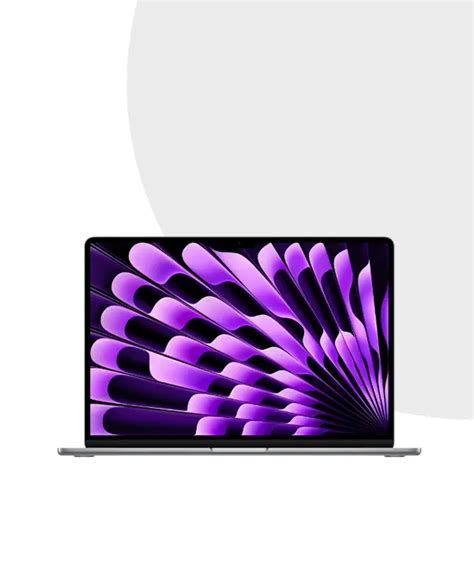
In my experience, the most surprising thing about the Air 15 is how Apple managed to make a 15-inch laptop feel genuinely portable. The chassis is thin and rigid, and the matte aluminum finish resists fingerprints better than I expected. I appreciated the refined edge treatments and the subtle taper that keeps it comfortable to hold when carrying in one hand.
That said, the lid is slightly more prone to flex than on my older Pro — it's not dramatic, but if I press near the camera I can feel a little give. For everyday use this never affected performance, but it reminded me this is the thin-and-light design leaning into portability rather than maximum structural robustness.
Display: room to work, with a couple of caveats
The 15-inch panel gives me the breathing room I wanted. I noticed a clear productivity bump when I stopped having to juggle windows constantly; I could have a text editor, reference material, and a browser open side-by-side without squinting. The colors are punchy and text looks crisp — great for writing and most photo editing tasks.
Where it falls short for me is outdoor visibility and sustained color-critical work. In bright outdoor light, reflections can be noticeable, and the peak brightness — while perfectly fine indoors — sometimes feels inadequate when I'm working in a sunlit patio. For casual photo edits and content consumption this isn't an issue, but if you do a lot of critical color grading or field work in bright environments, you'll want to test the specific unit in person.
Performance: snappy for daily tasks, limits when pushed
For 80–90% of what I do, the machine is extremely responsive. Boot and wake are instant, apps open quickly, and switching between multiple productivity apps and browser tabs is painless. During typical days I get weeks of productive use without thinking about performance bottlenecks.
However, when I deliberately pushed it — long multi-hour video exports, compiling large projects, or continuous heavy loads — I noticed the Air begins to thermally manage itself more aggressively than a Pro with an active cooling system. Exports take longer than on a similarly-specced Pro and sustained workloads can cause CPU clocks to throttle. If your workflow involves sustained 3D rendering or long encode jobs, expect better sustained performance from a fan-cooled machine. For bursts of heavier work, the Air 15 handles it well; for marathon compute tasks, it’s not the top choice.
Thermals and noise
One of the hallmarks of the Air line is near-silence. I appreciated being able to work in quiet spaces without fans kicking in — for most of my daily tasks the laptop remains whisper-quiet. But there's a trade-off: that quietness comes with conservative thermal limits. When the machine gets busy, it won’t get loud; it will instead lower performance to keep temperatures manageable. I value the quiet for meetings and cafés, but I did miss the sustained headroom available on a Pro machine when I had several hours of rendering to do.
Shop the latest Laptops & Computers picks on Amazon.
See Deals →Battery life and real-world endurance
Battery life is one of the strongest reasons I've kept this as my daily driver. In my experience, the Air 15 reliably delivers a full workday of varied use: email, documents, browsing, occasional video conferencing, and streaming music in the background. On typical mixed-use days I get 8–12 hours of real-world usable time, and lighter days with mostly writing and reading have pushed to the upper end of that range.
After 18 months, my unit's battery health sits around the low 90s percentage-wise; that's a typical, acceptable decline for daily use and travel. Charging is fast enough for my needs and I appreciate waking up to a near-full battery after an overnight charge. If you depend on absolute maximum long-haul uptime without charging, carry a small charger or power bank that supports the laptop's charging profile.
Keyboard, trackpad, and webcam
The keyboard continues to be one of my favorite parts. The keys have enough travel for long typing sessions, the layout is comfortable, and I experienced very few accidental presses. I find myself typing faster and more accurately on this keyboard than on many other thin laptops I've tried.
The trackpad remains a standout — large, precise, and responsive to multi-touch gestures. I use it extensively during travel and for quick edits, and it rarely made me miss an external mouse.
The webcam is "good enough" for meetings but not exceptional. Video calls look clear but lack the dynamic range and low-light performance of some higher-end external webcams. For day-to-day video calls it did the job, but I did notice grain and softness in dim lighting.
Speakers and microphones
The speakers are better than you'd expect from a thin laptop — full enough for podcasts, Zoom calls, and casual media. They get pleasantly loud without distortion at most volumes, though at maximum volume there's a hint of compression. The built-in microphones are reliable for calls and recordings but aren't class-leading; when I record audio for longer sessions I still prefer an external microphone.
Ports and expandability
Port selection remained a frequent point of friction for me. The Air 15 favors a minimal approach: a couple of USB-C/Thunderbolt ports and a headphone jack. I missed an HDMI port, a full-size SD card reader, and more variety without relying on adapters. I used a small USB-C hub while traveling, and while that solved the issue, it added a small item to my carry list — exactly what I was hoping to avoid.
As always with modern thin Apple laptops, internal upgrades aren't possible after purchase. I recommend buying the RAM and storage configuration you realistically expect to need for the machine's lifetime. I learned this the hard way: I upgraded to more storage up front, and that decision paid off when I didn't have to manage external drives constantly.
Software and ecosystem
In my experience, the macOS optimizations for Apple silicon make regular use feel integrated and seamless. App launches are fast, battery-saving features work well in the background, and continuity features with my phone and tablet remain genuinely useful. Over the 18 months, software updates have been smooth and haven't regressed performance for typical use cases.
Durability and day-to-day wear
After a year and a half of travel and daily commuting, the Air 15 shows the usual light scuffs on corners and a few micro-scratches on the underside where it rubbed against backpack hardware. Nothing structural. The anodized finish has held up well, and the keyboard shows minimal shine. I treat it moderately carefully — it's not indestructible, but it handled life on the road responsibly.
Discover deals on Laptops & Computers — updated daily.
View Offers →Pros & Cons
Pros
- Portability: The 15-inch screen without the weight of a traditional 15-inch laptop made a tangible difference on trips.
- Battery life: Excellent real-world endurance for mixed-use days — reliable for full workdays.
- Typing and trackpad: Comfortable keyboard and one of the best trackpads I've used on a thin machine.
- Quiet operation: Near-silent for daily work and meetings.
- macOS integration: Smooth software experience with reliable updates and ecosystem features.
Cons
- Sustained performance: Thermal management limits sustained heavy workloads compared to fan-cooled Pro models.
- Limited ports: Need for adapters/hubs for HDMI, SD cards, and multiple USB-A accessories.
- Outdoor display limits: Reflections and peak brightness occasionally fall short in bright sunlight.
- Non-upgradeable internals: You must choose RAM and storage wisely at purchase.
- Webcam and mics: Serviceable for calls but not class-leading for creators who need higher fidelity.
How it compares: a quick table
| Model | Screen | Weight (approx.) | Real-world Battery (my use) | Best for |
|---|---|---|---|---|
| Macbook Air 15 (2024) | 15" large, vivid for productivity | Light for 15" class | 8–12 hours | Traveling professionals, writers, students, office work |
| Macbook Pro 14 (2024) | 14" brighter, Pro features | Heavier than Air | 7–10 hours (but better sustained performance) | Power users, long renders, pro video/photo work |
| High-end Windows ultrabook | 15" or 16" options, variable | Varies; often heavier | 6–10 hours (varies widely) | Windows-centric workflows, more port variety, gaming |
Buying guide: which configuration and who should buy
If you're reading this in 2026 and considering a Macbook Air 15 2024, here are the practical points I used when deciding and that I wish I'd been even more explicit about.
Choose the right RAM
In my experience, 16GB of RAM is the sweet spot for most people who want a longer-lived machine. If you mostly do web browsing, writing, and lightweight editing, 8GB can be OK, but as browser tab counts climb and apps become more memory-hungry, you'll appreciate the smoother multitasking of 16GB. If you plan on running virtual machines, heavy development containers, or large photo libraries, consider 24GB+ if the option exists for the model you're looking at.
Storage: buy what you'll need long-term
Because you can't upgrade later, pick storage with a 2–3 year horizon in mind. I find 512GB to be the minimum comfortable for a daily driver if you store photos or local projects. If you keep big media files locally, choose 1TB or more. External SSDs work, but a fast internal drive is just more convenient and quieter.
Think about ports and travel accessories
If you travel a lot and rely on HDMI or SD cards, budget for a compact hub that includes the ports you need. I bought a small USB-C hub that lives in my bag; it solved every connectivity issue but was one more item to carry. If you want a single-cable meeting and docking setup, plan for that in the purchase budget.
AppleCare and repairs
Given the thin chassis and the likelihood of bumps during travel, AppleCare or an equivalent protection plan gave me extra peace of mind. Repairs for thin MacBooks can be more expensive without coverage, so I factored that into the overall cost of ownership.
Who should buy the Air 15 in 2026?
- Buy it if you want a light 15-inch laptop for productivity, travel, and long battery life.
- Buy it if you value quiet operation and excellent typing/trackpad experience.
- Avoid it if your daily work involves sustained heavy compute (long 3D renders, multi-hour encodes) — a fan-cooled Pro will be a better match.
- Avoid it if you need lots of ports without adapters or if you need class-leading webcam/mic performance out of the box.
Long-term ownership notes: what surprised me after a year
Two things surprised me after extended ownership. First, the combination of a large screen and light weight genuinely changed my travel behavior: I picked the Air 15 over larger "travel light" options because I could work comfortably on planes and in hotel rooms. The second surprise was how I adjusted expectations for heavy tasks — I learned to schedule long exports overnight or offload them to a faster machine when available.
If you treat the Air 15 for what it is — a portable productivity laptop with impressive battery life — it rewards you. If you buy it hoping to get workstation-class sustained performance, you'll be disappointed eventually.
Final thoughts and conclusion
After 18 months with the Macbook Air 15 2024, I still find it to be an excellent choice for a large-screen laptop that prioritizes portability and battery life. In my experience its strengths are real: the screen size boosts productivity, the battery lasts through my longest mixed-use days, and the keyboard and trackpad keep me comfortable during long writing sessions. The trade-offs—limited ports, thermal-limited sustained performance, and middling webcam/mic—are real but manageable if your needs align.
If your workflow in 2026 still looks like mine — a mix of writing, development, casual creative work, lots of travel, and an expectation of quiet operation — the Air 15 remains a very good laptop. If you need consistent, heavy compute performance or want an out-of-the-box port roster, consider a Pro or a different class of machine. Personally, I kept